- A Data Lake is Not a Single Source of Truth
- Data Lake vs. SSOT: Storage Does Not Equal Knowledge
- Single Source of Truth vs Multiple Versions of the Truth
- Implementing Enterprise Knowledge Governance Through Knowledge Graphs
- How a Knowledge Graph Transforms Raw Data into a Trusted AI Foundation
- 5 Key Benefits of a Graph-Based Single Source of Truth Architecture
Data lakes are often designed to centralize all organizational data, promising clarity and alignment across the enterprise. Yet, as teams navigate this vast repository, data inconsistencies arise and dashboards may produce conflicting results, revealing that the very tool meant to unify information cannot fully serve as a single source of truth architecture. Is your organization facing this challenge? A solution exists that restores consistency and unlocks the full potential of enterprise knowledge.
Limitations of Data Lakes in Delivering a Single Source of Truth Architecture
- Data is scattered and inconsistent.
- Multiple versions of key entities coexist.
- Teams duplicate efforts reconciling the same data.
- Analysts lose confidence in reported metrics.
- Strategic decisions are delayed or potentially misguided.
Data Lake vs. SSOT: Storage Does Not Equal Knowledge
A data lake centralizes organizational data, but it does not automatically create understanding or alignment. Large volumes of raw information without governance leave teams unsure which numbers to trust, slowing decision-making and increasing inefficiency. In other words, storage alone is not knowledge.
The difference between a data lake and a single source of truth (SSOT) is clear: a data lake collects data, while an SSOT defines and clarifies it. Organizations often discover the limitations of a data lake when they encounter the following challenges:
-
Analysts spend excessive time reconciling conflicting figures across departments.
-
Reports leave decision-makers uncertain about which numbers are correct.
-
Metrics carry different meanings in different contexts.
-
Data remains unused because teams cannot interpret it confidently.
-
Multiple versions of the truth persist across the organization.
Implementing a single source of truth requires a robust enterprise knowledge governance strategy to define authoritative metrics and business entities. This clarity transforms raw data into actionable knowledge, addressing misalignment and inefficiencies caused by conflicting information and setting the stage for truly informed decision-making.
Single Source of Truth vs Multiple Versions of the Truth
Data lakes and warehouses solve the problem of storage, but they do not solve the problem of meaning across the organization. Even with a solid storage infrastructure, you can still end up with multiple versions of the truth.
Enterprise truth depends on interconnected knowledge:
- Clear and agreed definitions for every core entity.
- Explicit relationships that give each entity its context.
- Ownership that ensures accountability for accuracy.
- Lineage that shows how every metric is created.
- Controlled semantic evolution to prevent misalignment over time.
If the word “customer” means different things in CRM, billing, and support, your architecture is fragmented even when your systems appear unified, highlighting the challenges of interoperability identified in the European Commission’s Annual Report on Interoperability. This is where the enterprise knowledge graph transforms the game.
Implementing Enterprise Knowledge Governance Through Knowledge Graphs
A knowledge graph is a way of representing information that captures entities, their relationships, and the rules that connect them in a structured, easily interpretable form. Once you accept that storage is not enough, the question becomes practical: how do you operationalize shared meaning?
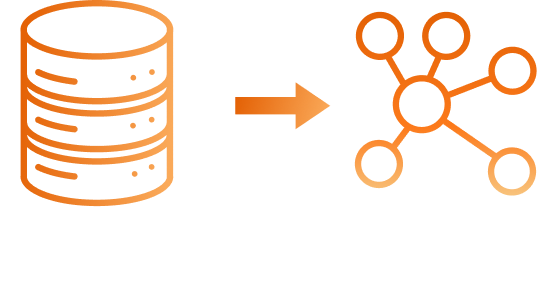
A knowledge graph changes the layer where alignment happens. Instead of focusing only on tables and files, you model:
- Core business entities.
- Relationships between them.
- Constraints and rules.
- Business vocabulary.
- Data lineage connections.
This becomes a semantic backbone across your data lake, warehouse, and operational systems. Rather than replacing your existing platforms, a graph overlays them with explicit meaning.
That is the architectural shift: from centralized storage to centralized semantics.
How a Knowledge Graph Transforms Raw Data into a Trusted AI Foundation
Raw data alone cannot provide context, creating inefficiency and inconsistency. A knowledge graph encodes interpretation directly, allowing you to:
- Link records across systems through identity resolution.
- Attach governance metadata to entities.
- Model hierarchies and dependencies.
- Enforce consistent definitions across domains.
This ensures AI and reporting consume harmonized, contextualized data, creating a trusted foundation for decisions and a unified view of enterprise knowledge.
5 Key Benefits of a Graph-Based Single Source of Truth Architecture
At the start of this article, we asked what a single source of truth architecture really means. Many still link it to data lakes, but the reality is clear: it is a governed, authoritative semantic layer that ensures consistency and alignment.
A graph-based single source of truth delivers this layer ready for reliable AI.
The five key benefits of trusting an enterprise knowledge graph are:
- Semantic Consistency: aligns your data lake, warehouse, and applications through shared entity definitions.
- Controlled Evolution: changes in definitions propagate systematically without fragmenting downstream models.
- Stronger Governance: governance rules, lineage, and ownership are embedded directly in the knowledge model.
- Reduced Reconciliation: minimizes manual cross-checks between dashboards and departments.
- Reliable AI: models operate on explicitly defined relationships, producing accurate, actionable insights.
Your existing infrastructure, including data lakes, warehouses, and lakehouses, remains valuable. The knowledge graph does not replace them; it orchestrates them, turning raw data into a trusted, unified foundation for the enterprise that empowers every team, every decision, and every AI initiative with clarity and confidence.
Ready to explore what Velorum can uncover?
If you would like to see how Velorum can map and activate your organisation’s knowledge in weeks, our team can provide a tailored demonstration and a complimentary assessment of your current knowledge landscape.